
Last updated November 22, 2026
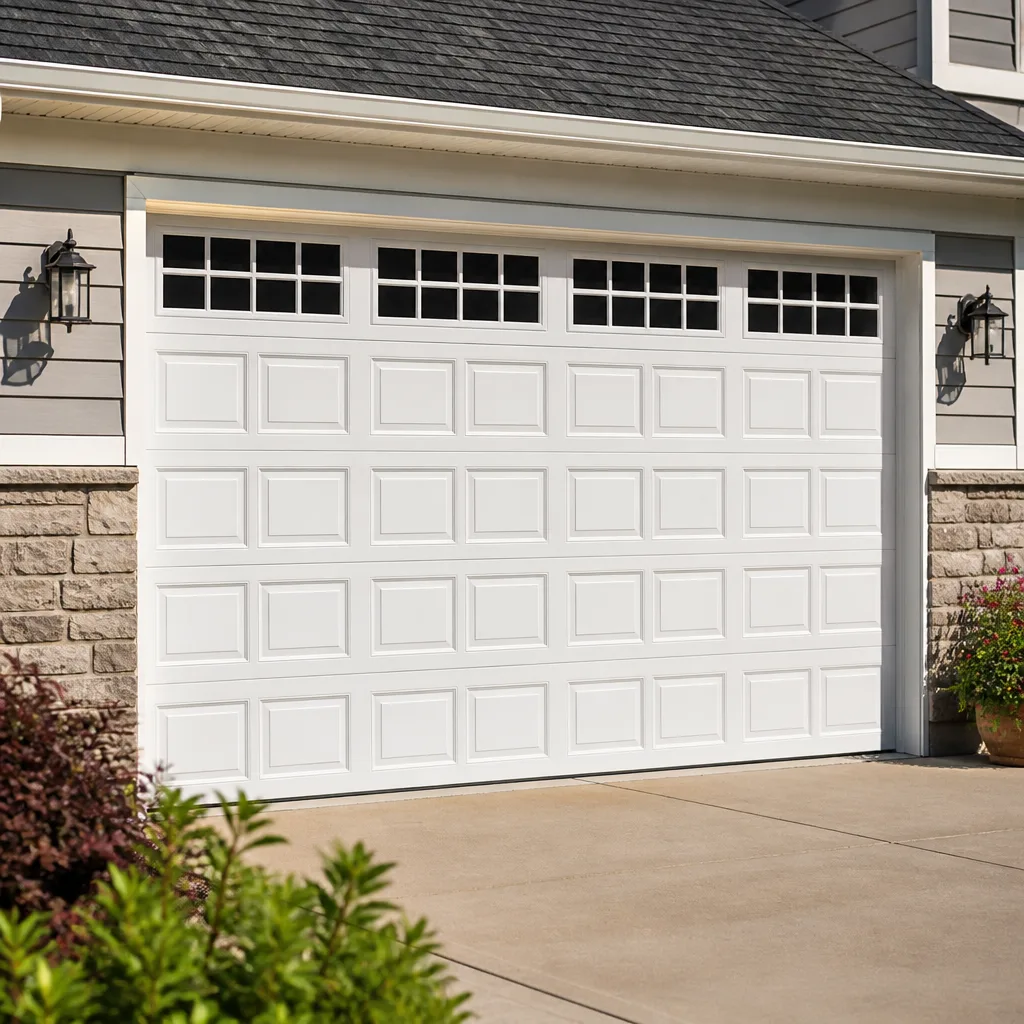 Raised-panel steel
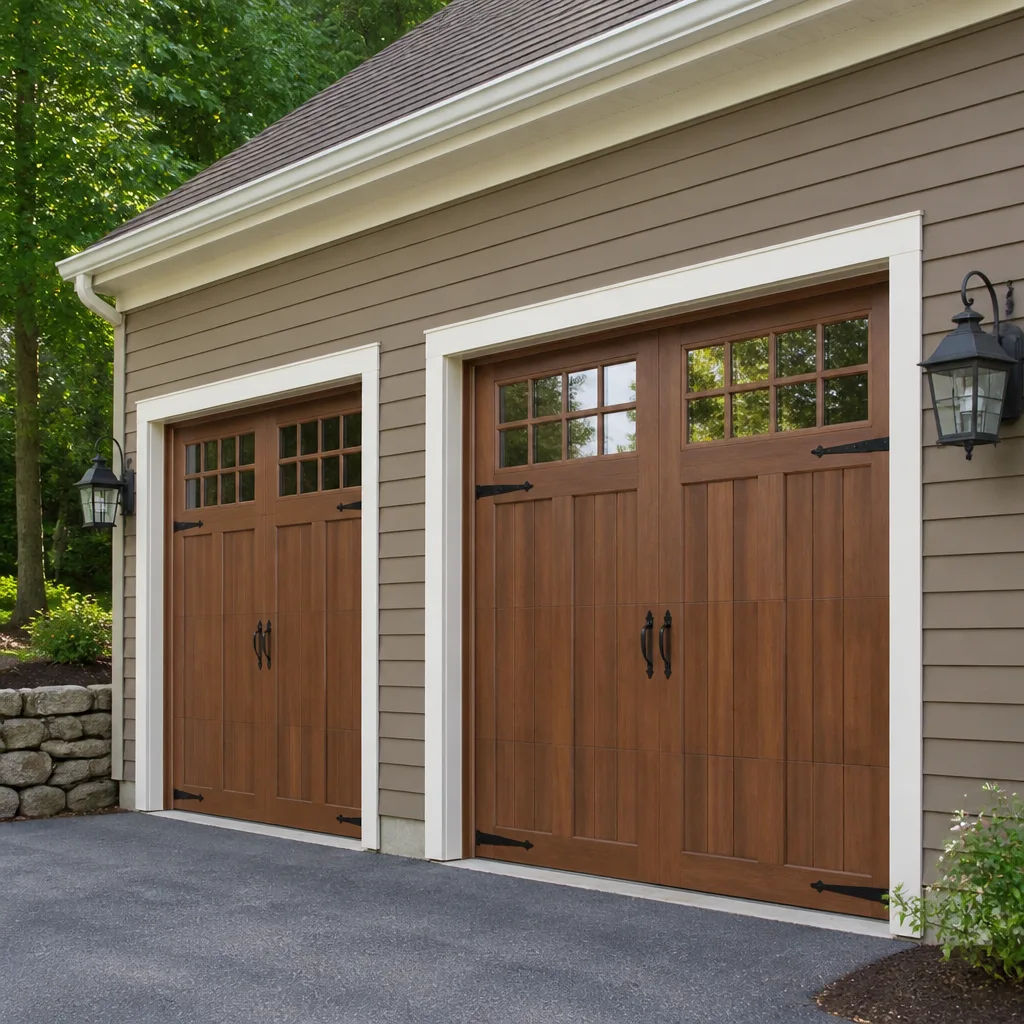 Carriage house
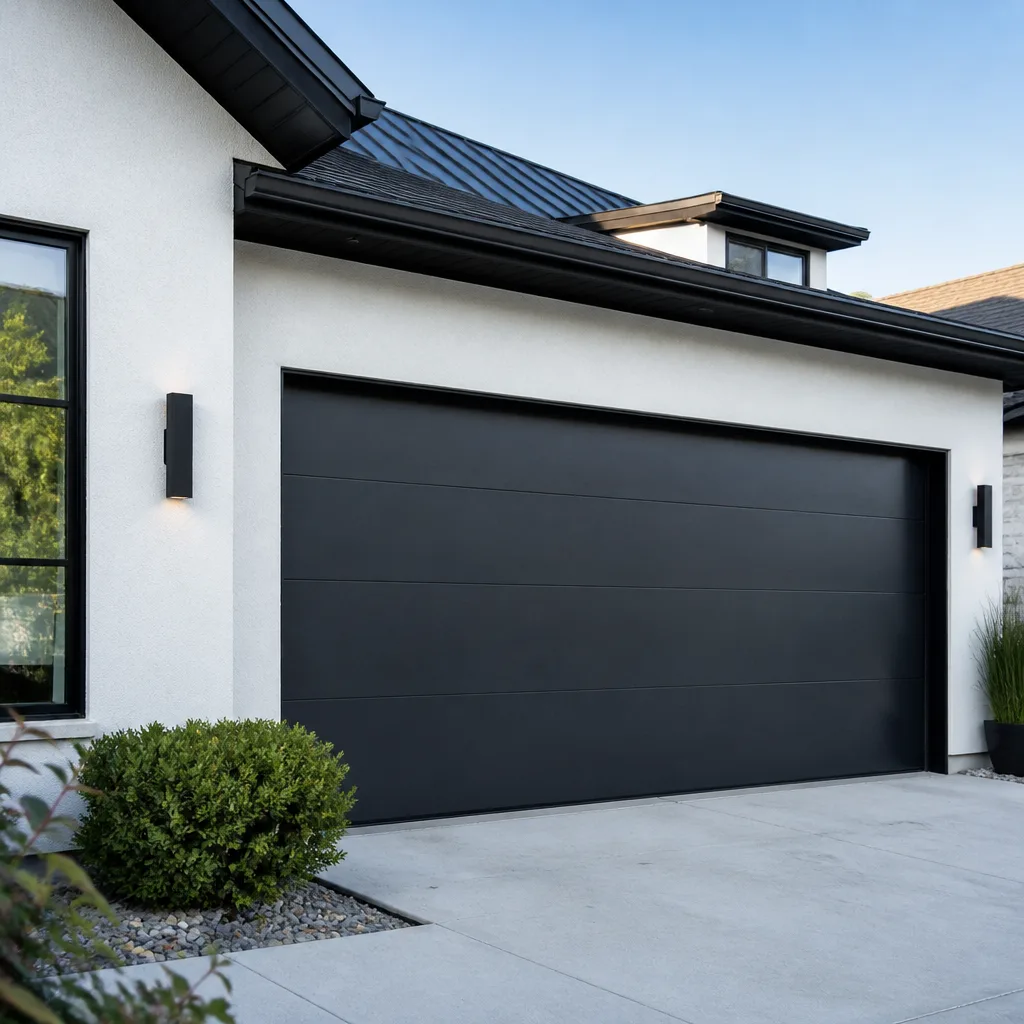 Modern flush
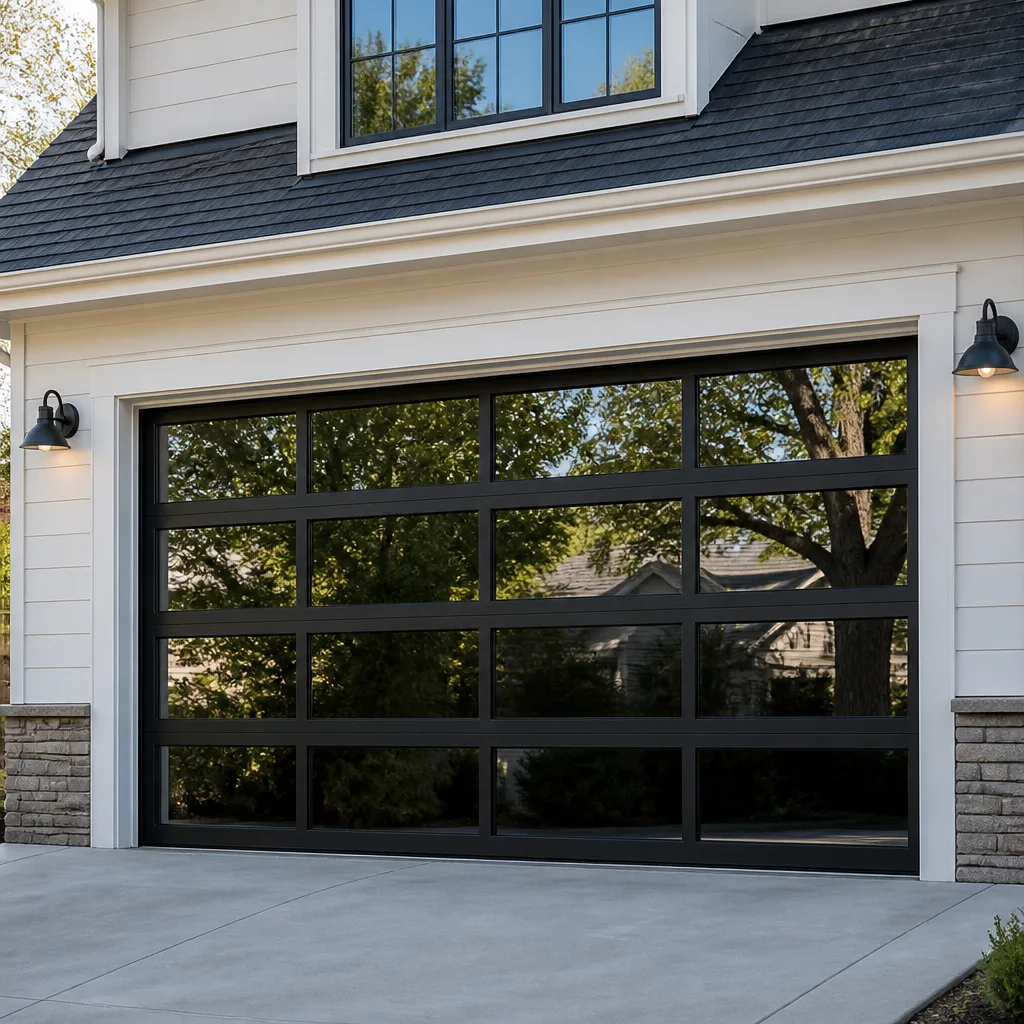 Full-view glass
 LiftMaster openers
 Chamberlain openers
Full 25-point door and opener safety check with every visit - springs, cables, rollers, tracks, and your LiftMaster or Chamberlain opener included
You get a price before we start. It does not change when the pro arrives.
Get your free estimateGarage Door Emergency Preparedness Guide for Arlington Homes
Most people treat their garage door like a wall. It’s closed, it’s quiet, and it works. Then one morning the springs let go, the power dies, or the opener grinds to a halt, and a wall becomes the one thing standing between you and work, school, or the road. The odd part is that the failure itself is rarely the emergency – the lack of a plan is. We work on these doors across Arlington every week, and the same scene plays out: a homeowner standing in the driveway with no idea what to do next. This guide walks through the three kinds of garage door emergencies, how to respond to each one safely, and how to stay ready before anything breaks.
Quick Answer
Garage door emergencies fall into three categories: sudden mechanical failure (a snapped spring, a derailed cable, a bent track), power outage (no opener function, manual release needed), and security breach (a door stuck open or refusing to close). Each one calls for a different first move, but every one starts with the same rule: do not force the door by hand or attempt spring or cable repair yourself. Get the door into a safe state, then call a specialist.
Styles & brands we work with
- Raised-panel steel
- Carriage house
- Modern flush
- Full-view glass
- LiftMaster openers
- Chamberlain openers
Table of Contents
- The Three Kinds of Garage Door Emergencies
- How to Manually Release Your Opener
- What to Do When a Spring Breaks While Your Car Is Inside
- Securing a Door That Won’t Close After a Cable or Track Failure
- Power Outage Protocol for Arlington Homes
- Who to Call and What to Have Ready
- Prevention: How to Be Ready Before a Failure
The Three Kinds of Garage Door Emergencies
A garage door emergency isn’t a single thing. It’s three different scenarios that happen to share a doorway, and mixing them up wastes time. Sorting out which one you’re facing takes about ten seconds and can change how you respond.
Sudden mechanical failure is what most people picture. The torsion spring snaps with a crack you can hear from the kitchen. A lift cable slips off its drum and the door hangs crooked. A track bends after a bumper tap. Something physical has broken, and the door cannot safely be moved until a technician handles it. These are the cases where forcing the door is the worst thing you can do – a door with one good spring and one broken one is unpredictable, and the remaining spring is under enormous tension.
Power outage is a different animal. Nothing is broken. Your opener just has no electricity to run, so the door is stuck wherever it sits. As anyone who’s lived through a storm in Arlington knows, these outages don’t follow a schedule. The response here is about getting the door up and down manually – and that’s a learned skill, not an instinct.
Security breach is the one homeowners think about least. The door is stuck open, jammed halfway, or won’t latch closed. The house is exposed to the street all night. The immediate priority isn’t fixing the door; it’s making the house secure until you can get a technician out. There’s a temporary measure for that, and we’ll cover it below.
Battery-backup openers help with the power-outage case, and modern LiftMaster and Chamberlain models often ship with it. But it only buys you a few open-and-close cycles, and only if the battery is actually charged. If you’ve never checked yours, that’s the first maintenance task on this list. For ongoing garage door repair across Arlington, the important thing is knowing which category you’re in when the phone rings.
How to Manually Release Your Opener
Releasing a garage door from its opener is the single most useful emergency skill a homeowner can learn. It’s also the step most people fumble the first time. The release isn’t hidden – it works the same way on the three brands that dominate Arlington homes, with one important variation.
Every belt and chain drive opener has a red pull handle on a short cord hanging from the carriage that rides the rail. Pulling it disconnects the door from the opener motor, so the door travels freely on its springs and tracks. Once released, the door operates like a manual door – which means it needs both arms to lift, because you’re moving it against its spring counterbalance.
Here’s how to do it safely:
- Stand with the door closed and level. Do not pull the release if the door is open, or if it’s hanging unevenly. A disconnected door that’s already off-balance can slam.
- Pull the red handle straight down once. It should click and the carriage should release. Don’t yank or hold it. It’s designed to release and stay released.
- Lift the door slowly with both hands. If it feels much heavier than usual, stop – that means a spring is broken or failing, and the door is not in manual-operable condition.
- To re-engage, close the door fully, then pull the handle down once more (LiftMaster and Chamberlain models) until you hear the carriage click back into the rail. Test by momentarily nudging the opener.
Genie openers work the same way, but on some models the cord is shorter and the handle sits closer to the rail. For homeowners with a lift-height ceiling, that means less clearance for reaching up. If your Genie cord is awkward to reach, it’s worth repositioning now, not during a storm.
One more thing about brand differences: Craftsman and Raynor openers use the same red-handle release principle, though older Craftsman units sometimes require a little more push-and-pull to re-engage the carriage. If you own one, practice the re-engage step once while the power is on. It’s a five-minute exercise that saves a lot of cursing later. If your opener release still won’t re-engage, garage door opener repair is a straightforward job for a technician who knows the brand.
What to Do When a Spring Breaks While Your Car Is Inside
A broken torsion spring while your car is inside the garage is the messiest of the emergencies. You can’t drive out, the door is too heavy to lift by hand, and the morning is already gone. Take a breath. The good news: you can usually get the car out safely – but only if you’re patient and skip the shortcuts.
First, understand what you’re dealing with. A residential door usually has one or two torsion springs mounted over the door on a shaft. When one snaps, the door loses half its counterbalance. If both go, the door has no lift support at all. Either way, the door becomes extremely heavy, and if it’s been lifted partially, it will slam down when released. That’s why NOBODY should be standing under or inside the closed section of the door when you’re working on it.
Here’s the safe approach:
- Do not disconnect the opener. If the door is fully closed, leave it attached. The opener carriage adds a small amount of holding force that makes handling the door slightly safer.
- Release the emergency brake and back the car as far from the door as the garage allows. This keeps your vehicle out of a fall zone if anything shifts.
- Try the manual release – carefully. With the door fully closed, pull the red handle, then lift with both hands. If the door rises with only moderate force, work it up slowly and park a ladder or a heavy object under the door’s bottom edge as a safety prop before driving out. Do not rely on the prop as a permanent fix.
- If the door won’t lift, leave it. Do not try to force a door with a broken spring. That’s how fingers, wrists, and overhead doors end up in bad places. A technician with proper tools and spring winding equipment can handle it.
Broken springs are a safety-critical repair, and the reason a garage door spring repair specialist avoids DIY on this is that the spring is under hundreds of pounds of tension even after snapping. One wrong move with a winding bar or a pair of pliers, and the injury is serious. Our technicians have up to 12 years of experience with this exact job, and it’s a service a lot of generalists won’t touch. When a spring lets go while your car is inside, call a specialist who handles this kind of work day in and day out.
Securing a Door That Won’t Close After a Cable or Track Failure
A door that won’t close is a different kind of problem: the security of your home is exposed until the door is fixed. If it’s late, if you can’t get a technician out right away, or if you need to protect the opening while you wait, here’s how to make it secure without making the repair worse.
The most common cause is a cable that’s slipped off its drum, or a track that’s been knocked out of alignment. When that happens, the door hangs crooked. Do not force it closed – a misaligned door that’s forced can come off the track entirely, and now you have a heavier object in a worse position. Step back and secure the opening instead of the door.
Here’s the temporary approach:
- Drop the manual release first. Disconnect the opener so no one accidentally triggers it and pulls the door farther out of alignment.
- Prop the door if it’s already partially open. Use a clean, sturdy ladder or a length of wood under the bottom edge – not chairs, not boxes, not a cooler. The goal is to relieve weight on the misaligned track.
- Block the opening from the inside. Push a vehicle up against the door (if it’s still on the car side) or move a heavy piece of furniture against it. The point is not to close the door; it’s to prevent anyone pushing through the opening from the outside.
- Add a physical barrier to the doorway access. A piece of plywood cut to the opening held in place with clamps works for a night. So does a stack of moving boxes. A closed interior door to the house is your best friend here.
- Turn on exterior lighting. A well-lit driveway on an open garage is a meaningful deterrent. Make sure the neighbors can see the front of the house.
For a knocked track that’s still holding the door, a deadbolt-style lock on the door’s bottom edge is sometimes enough to secure it, but that’s a judgment call that changes door to door. In our experience the safest route is to block the opening, not to fight the door. Call (855) 340-9110. We answer 24/7. Fast dispatch from 7am to 7pm, Sunday through Friday, so you don’t have to spend the night standing guard over an open garage.
Power Outage Protocol for Arlington Homes
A power outage is not a garage door failure – but it becomes one the moment you need to leave and the opener won’t respond. Your response depends on whether your opener has a battery backup and whether you’ve kept it charged. Arlington’s storm seasons mean outages are worth planning for, but the preparation takes five minutes and pays off for years.
If your opener has a battery backup system, the door will usually still open and close on its own for a while. LiftMaster and Chamberlain models sold with battery backup are common here. But the battery only gives you a few cycles, and it degrades over time. The key habit: test it once a season by unplugging the opener and operating the door. If it won’t lift on battery power, replace the battery before the next storm.
If your opener has no battery backup, you’re on manual. The process:
- Pull the red release handle. That disconnects the opener from the door.
- Lift with both hands. A properly balanced door lifts with moderate effort – a good spring system counterbalances most of the weight.
- To close, pull it down slowly and firmly. Don’t let go until it’s fully seated, or it can slam.
- When power returns, re-engage the carriage by closing the door fully and pulling the red handle until it clicks back in.
Now the thing most people miss: cord placement matters. A release cord that dangles near the top of a nine-foot door is impossible for a shorter family member to reach, and dangerous on a stepladder. If your release handle sits above head height on a stepstool or ladder, have it shortened or repositioned while the power is on. That’s a two-minute job and it matters a lot when you’re doing this in the dark with a flashlight between your teeth.
One more line of defense: test your manual release at least twice a year. It’s the same idea as checking a fire extinguisher. You don’t want to learn how it works while you’re using it. If your release won’t disconnect, you’ll want garage door opener repair before the next storm season – a carriage that’s seized up won’t help you when the grid goes down.
Who to Call and What to Have Ready
The quality of your emergency response is set by the first ninety seconds of the call. The difference between a technician who arrives prepared and one who has to make a second trip is usually information you can prepare in advance. Have the following ready before you dial, or at least start gathering it as you describe the problem.
What to have ready:
- The door’s brand and model. Look on the inside of the door, or the label on the spring or the bottom bracket. Clopay, Amarr, Wayne Dalton, and Raynor are brands we know well, and knowing which one you have speeds up diagnosis.
- The opener brand and age. LiftMaster, Chamberlain, Genie, Craftsman, and Raynor are the common ones in Arlington homes. The model number is usually printed on a label on the motor housing.
- What broke, when, and in what position. Was the door closed? Open? Did you hear a crack, or was it a silent failure? Did the door stop during movement?
- Whether a car is trapped inside. This matters for scheduling and safety.
- The door’s size and whether it has windows. A quick phone photo of the door and the broken part tells us more than a paragraph of description.
- Whether the door is currently secure. Closed, open, or partly open – this tells us how quickly we need to respond.
When you call, describe the situation in one or two sentences and give the address, the door brand, the symptom, and whether the house is exposed. We’ll walk through phone triage before anyone heads out, so the technician knows what’s likely to be wrong and what parts to consider. For garage door repair that can’t wait, we dispatch across Arlington with fast response, and we quote the price in writing before any work starts.
One thing worth saying plainly: emergency work doesn’t carry a hidden surcharge. The price is set per job by the written estimate, whether it’s a routine repair or a midnight cancellation. You’ll know the number before anyone touches the door.
Prevention: How to Be Ready Before a Failure
The best garage door emergency is the one that never happens. Most failures give you warning signs long before they strand you. A fifteen-minute check every few months, plus a few habits built into your routine, turns a crisis into a scheduled repair – and scheduled repairs are cheaper, easier, and less likely to leave your car trapped.
Here’s the routine we recommend for Arlington homeowners:
- Listen to the door every time it moves. A bang, a squeal, a grind, or a speed change is a signal. Twice a year, put a hand on each section of the door as it rises and feels for unevenness.
- Test the opener’s safety reverse every month. Place a roll of paper towels in the door’s path. The door should stop and reverse when it contacts the object. If it doesn’t, that’s a priority repair.
- Check the battery backup (if you have one). Unplug the opener monthly, operate the door, and plug back in. If the door won’t lift on battery power, replace the battery.
- Practice the manual release. Pull it once while the power is on, then re-engage. This is the single highest-value five minutes you’ll spend on your door.
- Keep the springs and hardware lightly lubricated. A door-specific lubricant on springs, rollers, and hinges once every season quiets the door and slows wear.
- Watch the springs for tight gaps or relaxed recoil. A spring that’s lost its tension or shows a visible gap needs inspection. Don’t wait for a break.
- Photograph your door, opener label, and spring setup now. If you ever have to call in an emergency, you’ll have the details ready.
For full servicing, replacement springs, or a full evaluation before storm season, a specialist who handles garage door spring repair in Arlington can check the balance and hardware in a single visit. If you need a new door, that’s a scheduled job, not an emergency – we measure, order, and book the install with a written price. The full slate of garage door repair options is one call away.
Common Mistakes to Avoid
- Trying to lift a door with a broken spring. A door with one failed spring weighs far more than it was designed to be lifted by hand. Force it, and the door or the person under it will lose.
- Cycling the opener repeatedly after a failure. If the door won’t move, running the opener again and again can strip the gear, bend the rail, or burn out the motor. Stop and diagnose.
- Using a chair, box, or cooler to prop a partially open door. None of these hold a door safely. Use a real ladder or a proper prop, and only after the door is disconnected.
- Ignoring a short or hard-to-reach manual release cord. A cord above head height is a real problem in an outage – especially if no one in the house can reach it without a ladder.
- Leaving a stuck-open door unattended overnight. An open garage is an open door. Block the opening, turn on exterior lights, and call for a same-day repair.
- Assuming the battery backup still works because the door opens. It opens because of the power, not the battery. Test it by unplugging the opener – that’s the only real test.
- Calling a general handyman for a spring or opener issue. Springs and openers on the major brands are specialist work. A generalist with a wrench often makes the situation more expensive.
See the difference
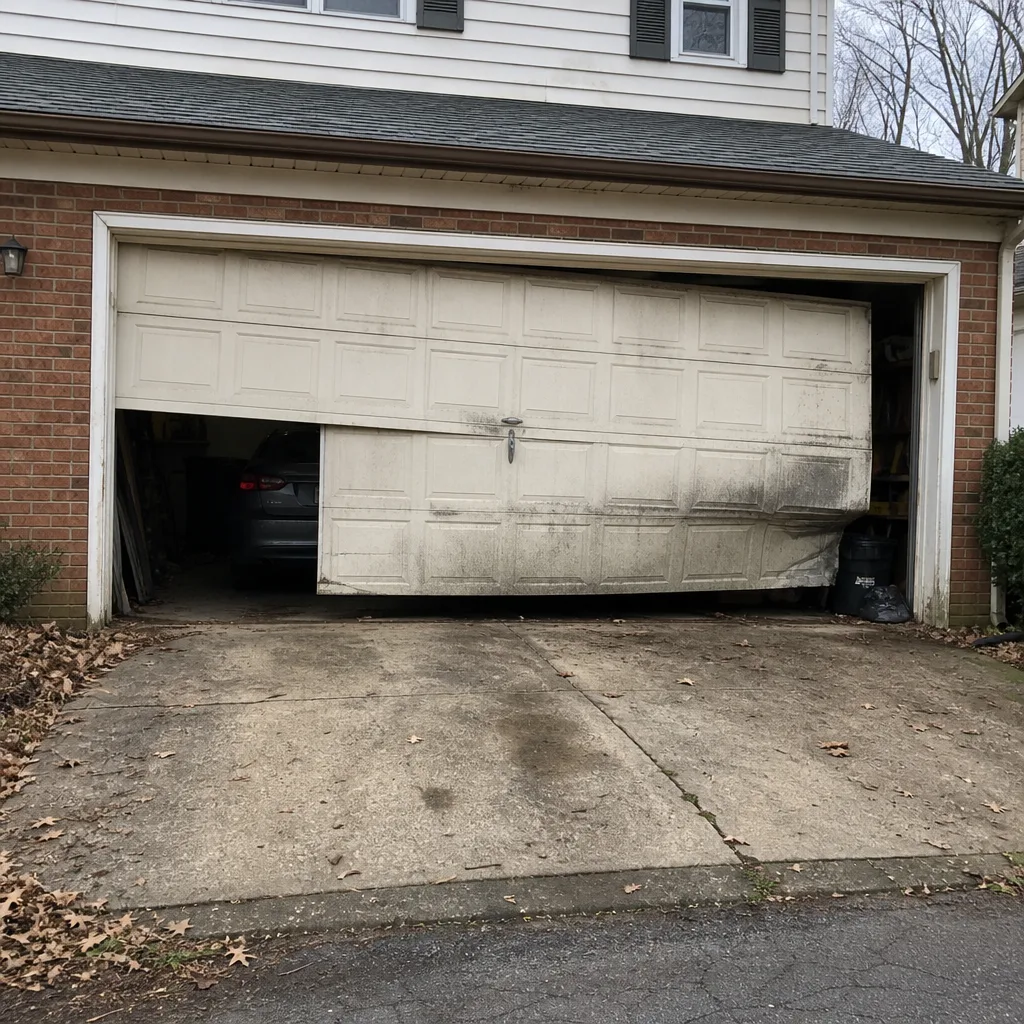 Before
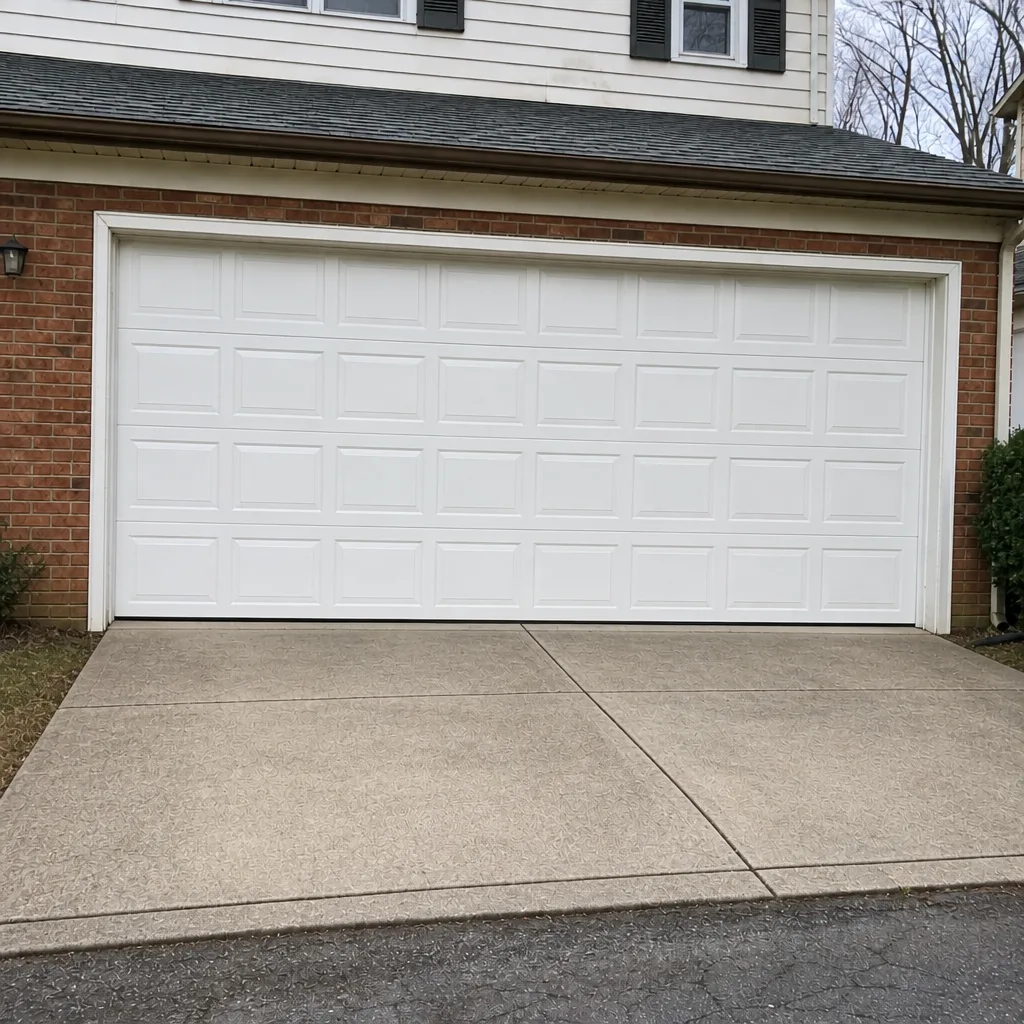 After
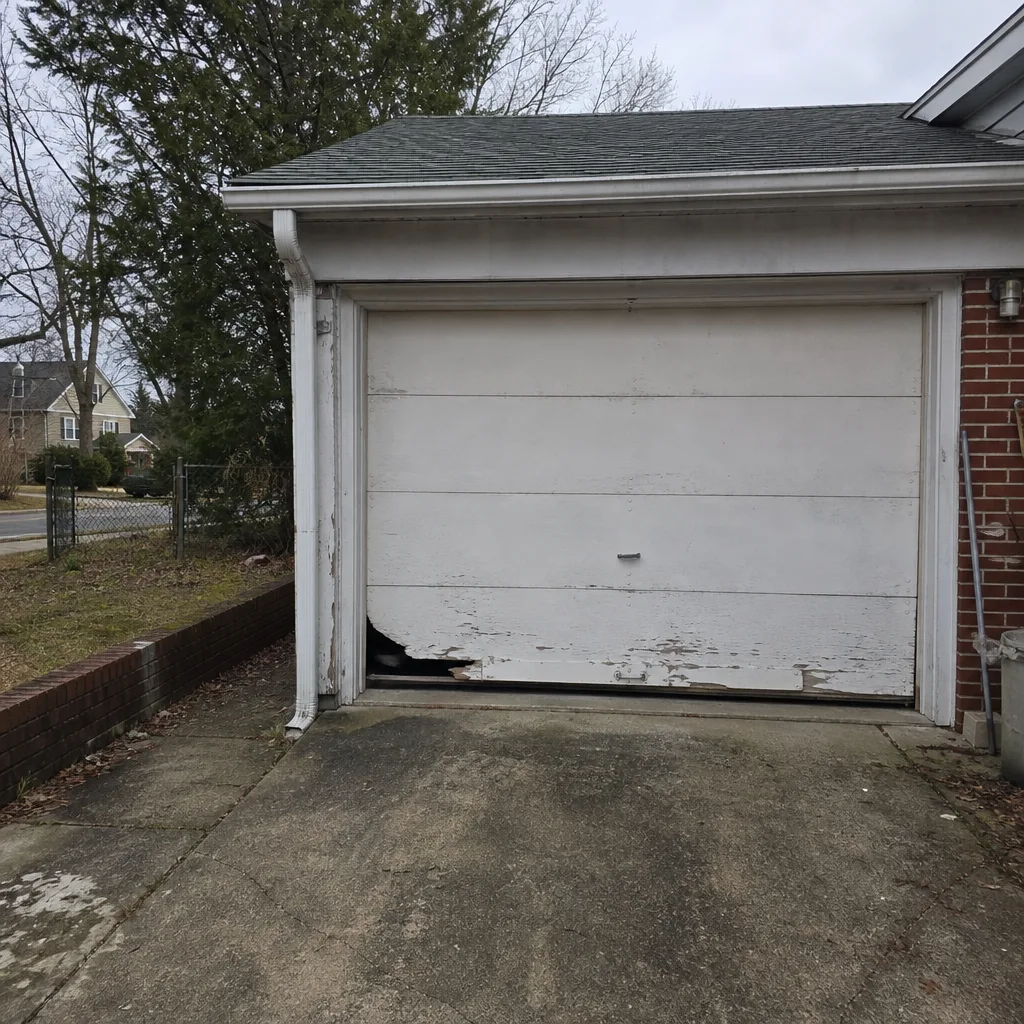 Before
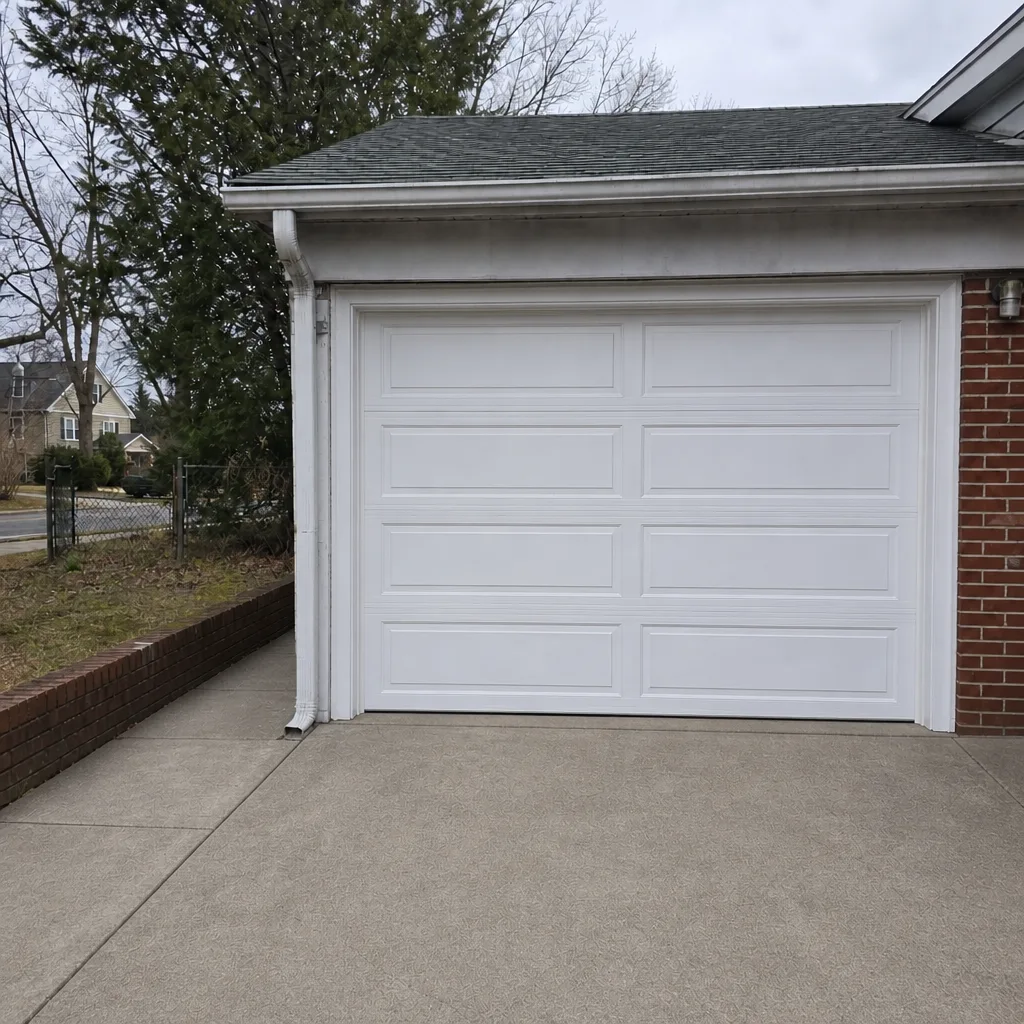 After
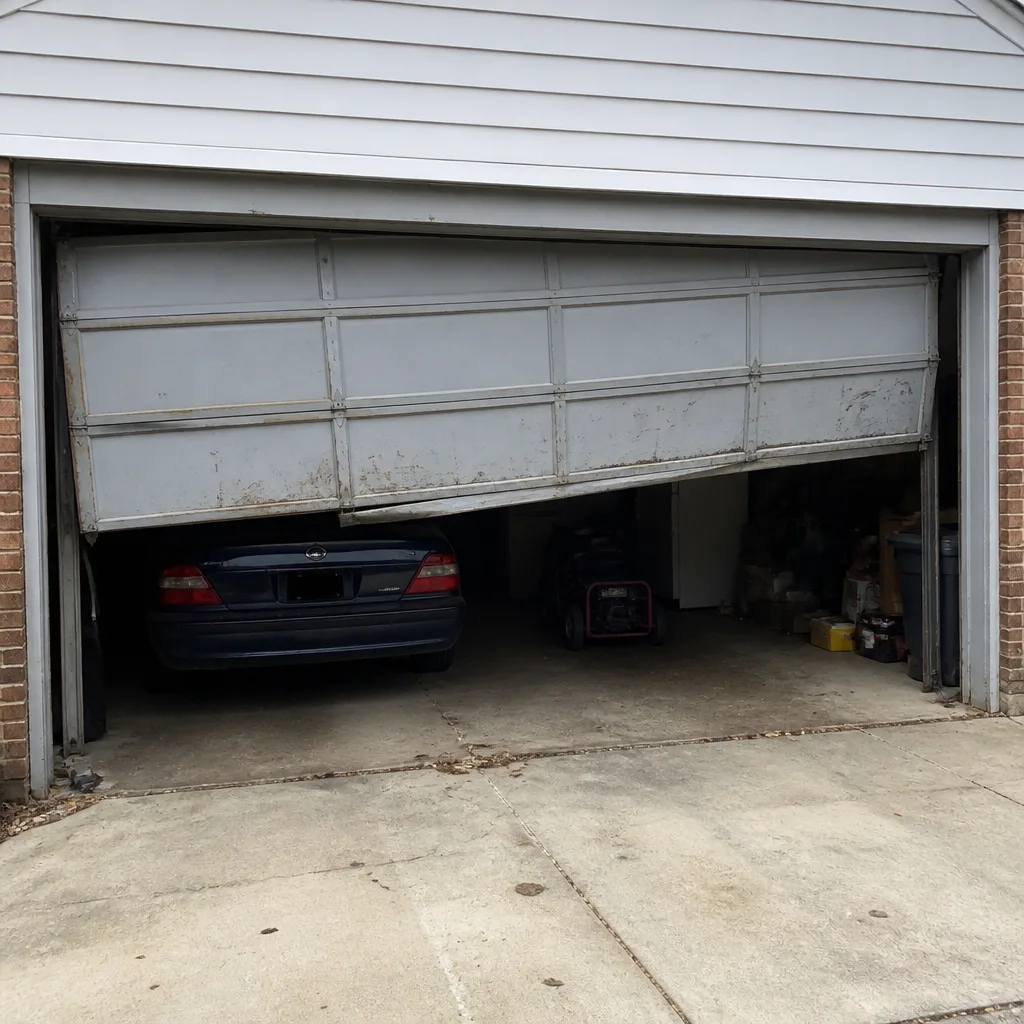 Before
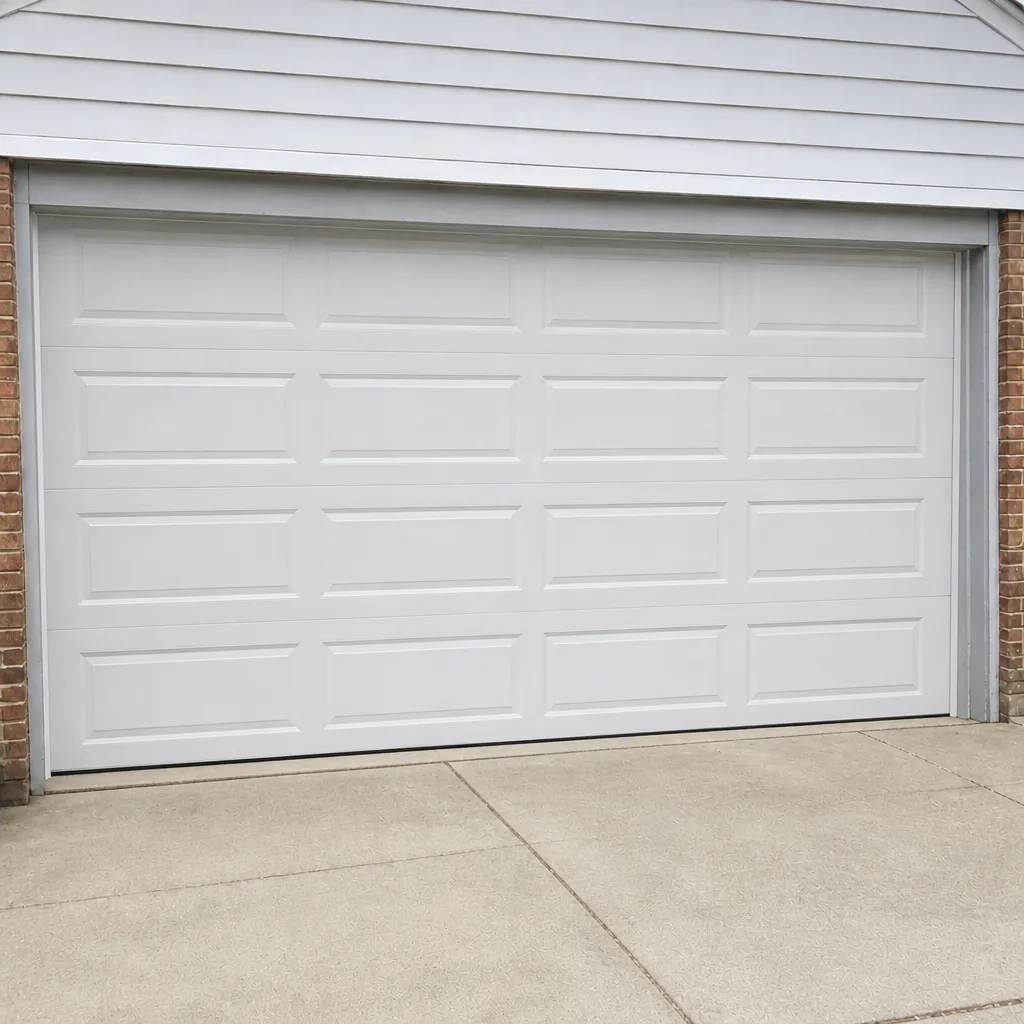 After
When to Call a Professional
Some problems are nuisance-level fixes you can solve with a new battery or a replaced remote. Others shouldn’t wait, and shouldn’t be handled by anyone other than a garage door specialist. The dividing line is usually whether the door can still be operated safely by the opener, or whether the door’s mechanical support has failed.
Call a professional if any of the following is true: you’ve heard a loud crack from the garage, the door hangs crooked, the opener runs but the door doesn’t move, the safety reverse fails, a cable is off its drum, a track is bent, a hinge or bottom bracket is loose, or the door is stuck open or closed and you can’t operate it safely. Springs and cables are always a specialist job – they’re under extreme tension and can cause serious injury.
Garage Door Repair Arlington Pros offers free estimates in Arlington – call (855) 340-9110. We answer 24/7. Fast dispatch from 7am to 7pm, Sunday through Friday, and quotes are written and agreed before any work starts.
Frequently Asked Questions
Stop using the opener, do not disconnect the door from the opener unless the door is fully closed, and call a specialist for spring repair. A broken spring leaves the door far too heavy to lift safely, and the remaining spring is under huge tension. Our technicians have up to 12 years of experience with this exact repair. Call (855) 340-9110 for an exact quote – estimates are free.
Pull the red release handle hanging from the opener’s carriage, then lift the door slowly with both hands. On a properly balanced door the springs do most of the work. When power returns, close the door fully and pull the handle again to re-engage it. If the handle is out of reach, don’t use a ladder to get to it while it’s dark – call us instead. Call (855) 340-9110. We answer 24/7.
Not safely. A door with a bent track or a slipped cable is misaligned, and forcing it closed can drop it off the track entirely. Block the opening from the inside, keep the door disconnected, and call for a same-day repair. Our dispatch runs Sunday through Friday, 7am to 7pm. Call (855) 340-9110 for a written estimate before work starts.
No. The price is set per job by the written estimate, and it’s the same whether you booked it last week or called an hour ago. You’ll see the quote before any work begins, so nothing changes when the technician sees the door in person. Call (855) 340-9110 – estimates are free.
LiftMaster, Chamberlain, and Genie are the most common, with Craftsman and Raynor frequently found on older installed systems. We’re factory-familiar with all eight of the major brands, which means we diagnose and source parts for the right model faster. If you can read the model number off the motor housing, that’s the fastest starting point. Call (855) 340-9110 for an exact quote.
The door brand and model, opener brand and model, what broke and in what position, whether a car is trapped, and whether the house is currently exposed. A phone photo of the door and the failed part saves time and often avoids a second trip. The more specific you can be, the faster we can help. Call (855) 340-9110. We answer 24/7.
The Bottom Line
Garage door emergencies come in three flavors – mechanical, power, and security – and each one has a specific response. A mechanical failure means stop using the door and call a specialist, especially for springs or cables. A power outage means manual release, and knowing how to use it before you need it. A security breach means block the opening and call for same-day repair. Add in the prep work – test the release, charge the battery backup, and keep the model numbers handy – and you’re ready for anything. If your door is stuck right now, that’s the call to make.
Call (855) 340-9110. We answer 24/7. Fast dispatch from 7am to 7pm, Sunday through Friday, and free estimates before any work starts. Reach Garage Door Repair Arlington Pros for emergency service, repair, springs, openers, or a full new installation – one call covers it all.
Written by the team at Garage Door Repair Arlington Pros.