
Last updated November 22, 2026
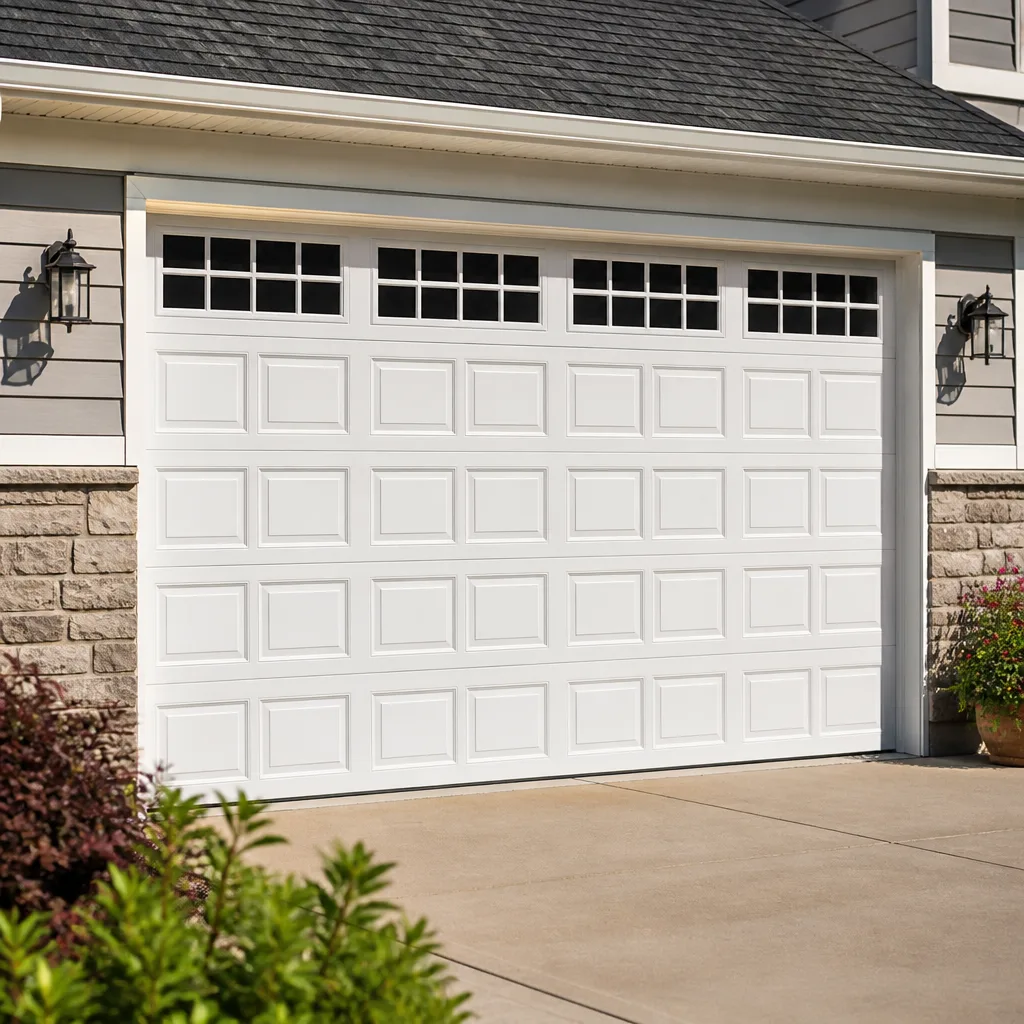 Raised-panel steel
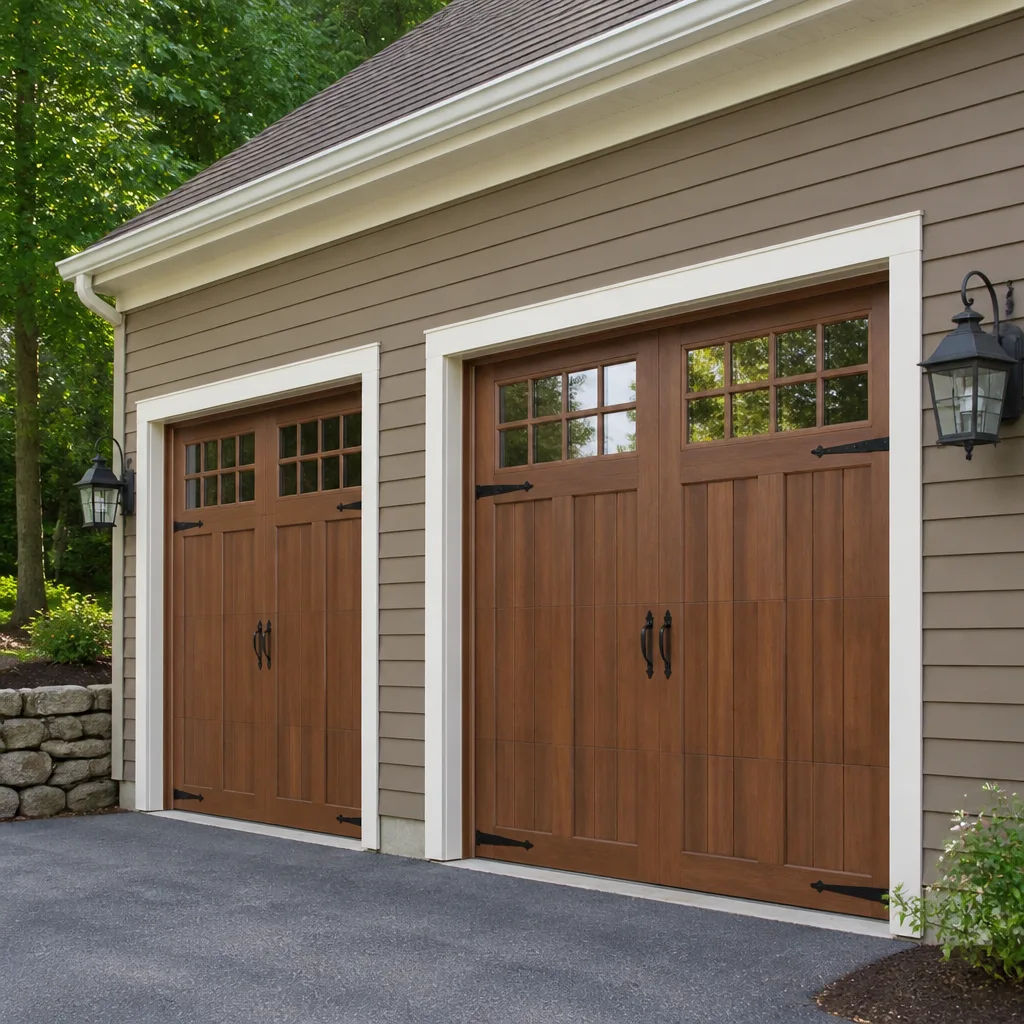 Carriage house
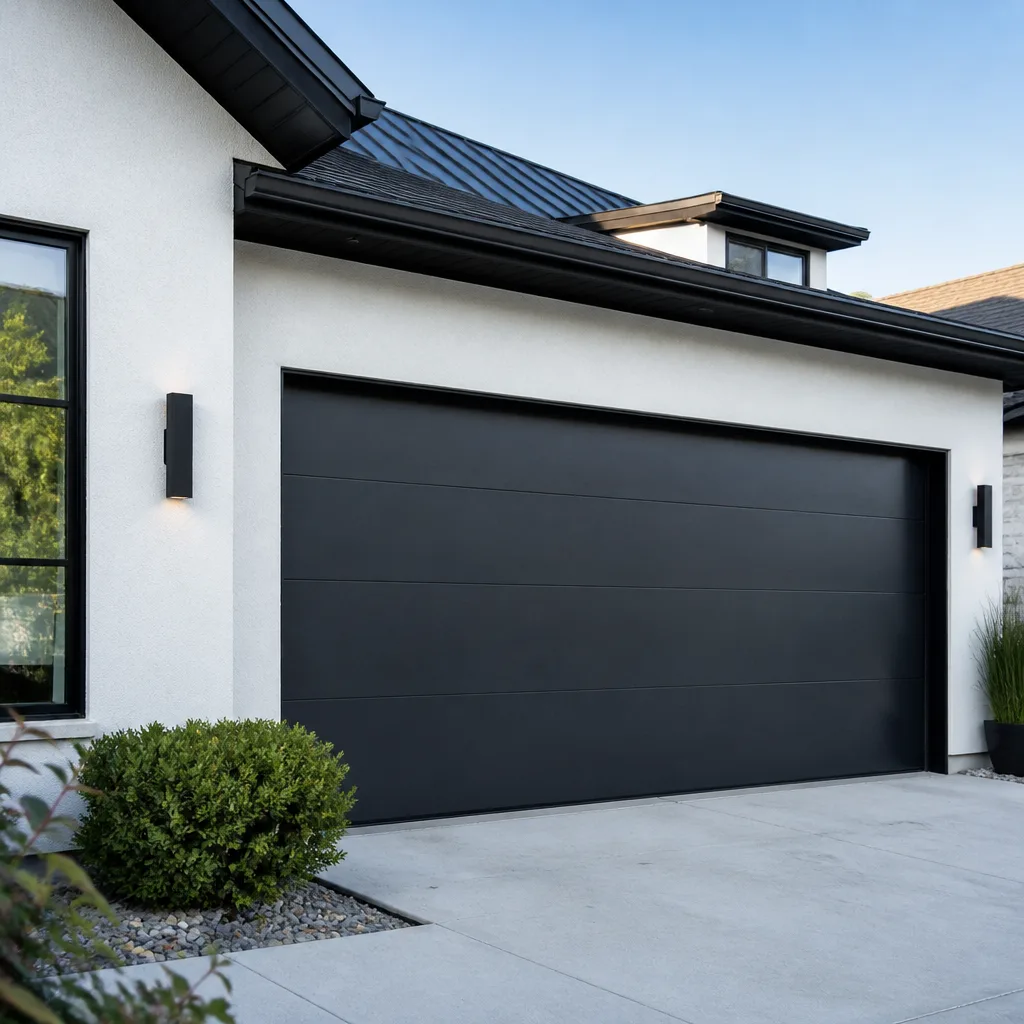 Modern flush
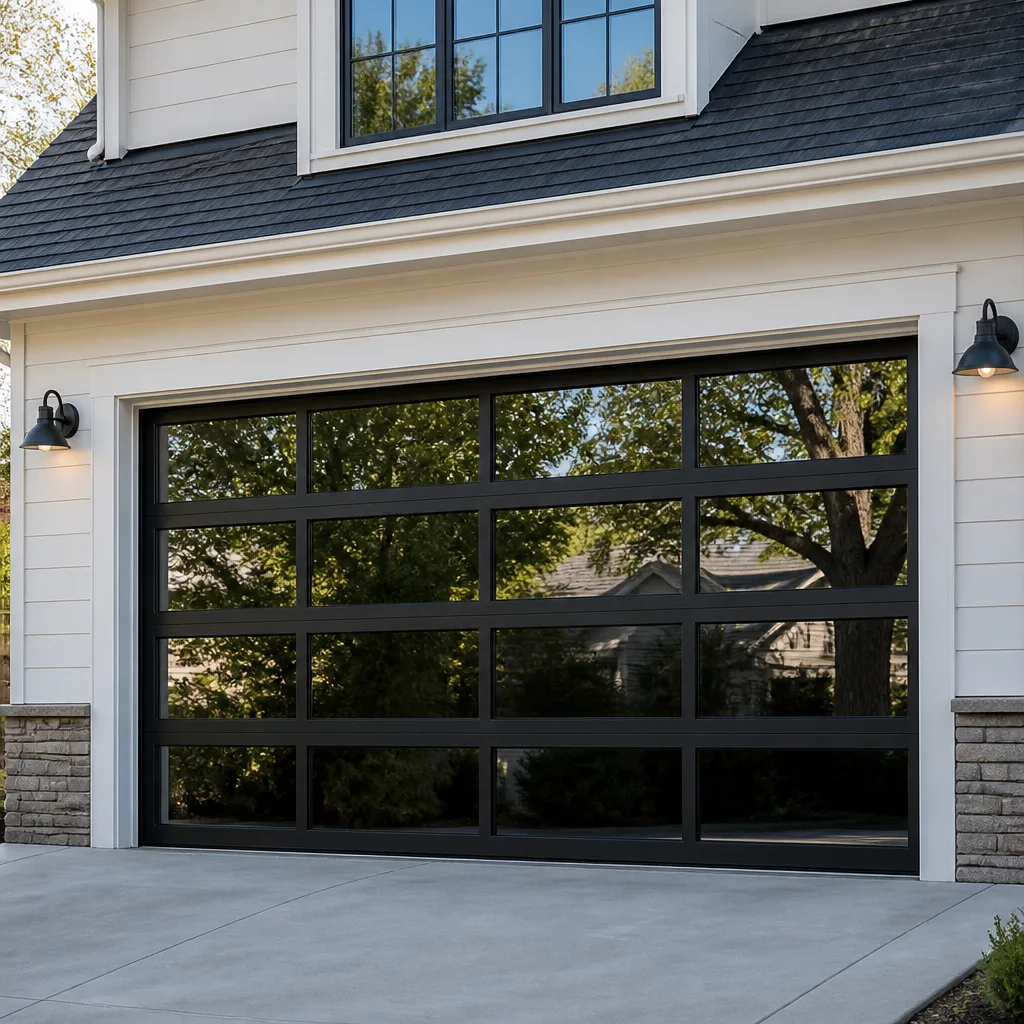 Full-view glass
 LiftMaster openers
 Chamberlain openers
Full 25-point door and opener safety check with every visit - springs, cables, rollers, tracks, and your LiftMaster or Chamberlain opener included
You get a price before we start. It does not change when the pro arrives.
Get your free estimateGarage Door Warning Signs: An Arlington Homeowner’s Reference Guide
A garage door that takes two seconds longer to close than it did six months ago is not “settling.” It’s a motor working against rising friction, and the next chapter is either a service call or a safety incident. Most garage door failures don’t arrive without warning. They telegraph for weeks through sounds, timing changes, and visual cues that homeowners write off as quirks. This guide decodes those signals by what they mean mechanically, so you can decide what’s urgent, what can wait, and what shouldn’t be touched at all. We work on Arlington doors every day, from century-old bungalows in Ashton Heights to newer builds out near Ballston, and the warning signs are remarkably consistent.
Quick Answer
The most reliable garage door warning signs are a door that reverses before it reaches the floor, grinding or popping sounds during travel, a visible gap or sag in the door panel, frayed cables, and springs that look stretched or show a visible gap. Any of these can point to a failing spring, a worn opener gear, or a misaligned track. A door that won’t close fully or reverses on its own is a same-day call, not a weekend project.
Styles & brands we work with
- Raised-panel steel
- Carriage house
- Modern flush
- Full-view glass
- LiftMaster openers
- Chamberlain openers
Table of Contents
- What Do the Sounds From Your Garage Door Actually Mean?
- What Visual Warning Signs Can You Spot From the Floor?
- How Do You Separate Cosmetic Issues From Safety-Critical Ones?
- Which Behaviors Point to the Opener Instead of the Door?
- Which Warning Signs Are Same-Day Emergencies?
- How Does Arlington’s Climate Affect Garage Door Wear?
- How Do You Run a Safe Monthly Inspection?
- When Is Repair the Wrong Answer and Replacement the Right One?
What Do the Sounds From Your Garage Door Actually Mean?
Sound is the earliest warning system your door has, and it’s the one homeowners ignore longest. A garage door in good working order makes a low, steady hum from the opener and a soft roll from the wheels in the track. Anything sharper than that is information. Here’s how we map the most common sounds to the component most likely causing them.
- Grinding: Usually a dry or seized roller, a bent track section, or debris lodged in the track channel. Left alone, a seized roller will grind a groove into the track itself, turning a cheap fix into a track replacement.
- Popping or snapping: Often a torsion spring that has just broken or is about to. This is the sound most homeowners describe when they call us in a panic. Stop operating the door and call.
- Squealing: A roller bearing running dry or a worn opener gear. Squealing that starts high and drops in pitch as the door moves is usually a roller issue.
- Slapping or banging: Loose hinges, a door out of balance, or a panel that has come loose from its hinge point. Slapping gets worse in cold weather when metal contracts.
- A single loud bang from the garage: This is typically a torsion spring breaking. The door will suddenly feel extremely heavy and may not open at all. Do not force it.
We’ve learned to ask callers one question first: does the sound happen at the same point in the door’s travel every time? A grinding sound that only happens near the top of the track points to one specific roller or track joint. A sound that varies points to something looser, like a hinge or a bearing. That one detail often tells us what we’re walking into before we arrive in Arlington.
If the sound comes with a door that moves unevenly or stops partway, that combination is a stronger signal than sound alone. For anything involving a door that won’t move or is producing a sharp popping noise, our garage door repair team can diagnose and fix it without you needing to guess.
What Visual Warning Signs Can You Spot From the Floor?
You don’t need a ladder or a toolbox to spot most failing components. The trick is knowing what to look at and what a healthy part looks like next to a failing one. Springs, cables, rollers, and tracks all give visual warnings before they fail, and all four can be checked from the garage floor with a flashlight.
Torsion and Extension Springs
A torsion spring should look like a tightly wound coil with no gaps between the wire wraps. If you can see a distinct gap in the coil, that spring is broken or close to it. Extension springs are the ones that run along the top of the track on either side of the door. They should be straight, with no kinks, and any spring that looks stretched longer than its neighbor is under uneven load.
Cables
Look at the cables that run up the sides of the door to the spring system. A healthy cable is straight and taut with no visible fraying. Any cable that looks frayed, has a kink, or has started to unwind is a safety-critical problem. A snapped cable under tension can whip across the garage. Don’t touch it and don’t operate the door.
Rollers and Tracks
Rollers should look round and turn freely. Flat spots, cracking, or a roller that has stopped turning are all visible from the floor. Tracks should be straight and even on both sides. A gap between the roller and the track, a bend, or a track that’s pulling away from the wall are all signs the door is coming out of alignment.
Door Panels
Stand back and look at the door with it closed. Panels should be level and even across the width of the door. A gap at one corner, a panel that looks bowed, or a door that sits lower on one side indicates a balance problem. In Arlington, we see a lot of this on older Clopay and Amarr doors that have been through many seasonal cycles without a tune-up.
If you’re looking for a second opinion on what you’ve found, Garage Door Repair Arlington Pros handles inspections and can tell you exactly what needs attention.
How Do You Separate Cosmetic Issues From Safety-Critical Ones?
The simplest way to triage is to ask one question: if this component fails completely, can someone get hurt? Cosmetic issues affect appearance or convenience. Safety-critical issues affect the door’s ability to stay up or come down in a controlled way. Here’s how we sort them.
- Cosmetic: Peeling paint, a dinged panel, a noisy roller that turns freely, a misaligned weather seal, or a door that needs lubrication.
- Can wait a few days: A door that’s slightly noisy but operates fully, an opener light that flickers, a remote that has stopped working and needs re-pairing, a sagging hinge that doesn’t affect the door’s travel.
- Safety-critical, call today: A broken or visibly gapped spring, a frayed or kinked cable, a door that reverses before touching the floor, a door that won’t stay closed, a door that comes off its track, or a door that feels unusually heavy when you lift it by hand.
If a symptom sits in the middle, the deciding factor is whether the door moves in a straight, even line. A door that drags, jumps, or hesitates on one side is working against something, and that something will fail. We’d rather look at it now than have you find out at the worst possible moment.
The line between cosmetic and critical is where most expensive mistakes happen. A homeowner in Arlington who ignores a sagging hinge because it “still works” is often the same one who later needs a full track realignment. Small misalignments compound over hundreds of open and close cycles.
For the specific case of failing lift and balance hardware, our garage door spring repair service handles the parts that carry the most tension and the most risk.
Which Behaviors Point to the Opener Instead of the Door?
A large share of “my door is broken” calls turn out to be an opener problem, not a door problem. The door is fine; the box on the ceiling has stopped telling it what to do. Four opener behaviors tell you the logic board or motor is the failure point, not the door itself.
- Lights blink but the door doesn’t move. On most LiftMaster, Chamberlain, and Genie units, a blinking light pattern signals a safety sensor trip or a logic board fault. If the sensors are aligned and the door still won’t move, the opener is the suspect.
- The door only opens partway, then stops. If it stops at the same point every time and the door itself moves freely, it’s usually the travel limit or force setting, not the door.
- The door reverses when it hits the floor. This is a force setting or sensor problem. If the door reverses before the floor, it’s more likely a sensor or a track issue. The distinction matters and it changes who you call.
- Grinding or humming from the opener box itself. A motor that hums but doesn’t move, or grinds audibly at the opener head, is usually a stripped gear or a failed drive. The door is typically fine.
This is why the brand matters. We’re factory-familiar with LiftMaster, Chamberlain, Genie, Clopay, Amarr, Wayne Dalton, Craftsman, and Raynor systems, and we work on the top three opener brands daily. When we hear a specific hum pattern from a Genie or a particular light blink from a Chamberlain, we often know the failure before we get to Arlington. Our garage door opener repair service covers all three major opener brands.
One caveat: a force setting that’s adjusted too high can mask a broken spring. Never crank up the force to make a stuck door move. If the door is heavy and the opener is straining, the opener is compensating for a door that needs repair.
Which Warning Signs Are Same-Day Emergencies?
Some signs can wait until a weekend tune-up. Others need the door disabled and a call placed the same day. The list below is what we treat as genuine emergencies; anything on it is a reason to stop operating the door until someone qualified looks at it.
- A broken torsion spring or a visible gap in the coil. The door becomes extremely heavy. Do not lift it, do not force the opener.
- A frayed, kinked, or snapped cable. Cables under tension are dangerous. Stay clear.
- A door that comes off the track or hangs at an angle. Trying to correct this by hand can cause the door to fall.
- A door that won’t stay seated in the open position. If it drifts down on its own, the balance system has failed.
- A door that reverses or stops mid-travel repeatedly. A door that reverses unpredictably can hit something or someone.
- A door with visible panel separation or a bow. Panels under tension can fail suddenly.
A door stuck open is often the most urgent of all, and it’s why we run dedicated emergency garage door service as a named offering, not an afterthought. Emergency service is available; we answer the phone and dispatch to Arlington as fast as we can get to you. Some of these symptoms, especially a broken spring or a cable issue, shouldn’t be handled by anyone but a trained technician. We say that plainly because we mean it. If your door is on this list, stop using it and call (855) 340-9110.
How Does Arlington’s Climate Affect Garage Door Wear?
Arlington sits in a humid subtropical zone with four distinct seasons, and that cycle puts specific stress on garage doors that homeowners in drier climates don’t see. The garage is usually the least climate-controlled room in the house, so it takes the brunt of the seasonal swing.
Summer humidity works on the metal parts. Rollers, hinges, and springs can develop surface rust, and dry bearings turn into grinding bearings. Spring and fall bring rapid temperature swings, and metal expands and contracts with each one. That cycle is hard on the springs, which are already under constant tension. We see more broken springs in Arlington after a sharp cold snap than at any other time, and more noisy rollers in the humid months.
Winter freeze-thaw cycles affect the concrete and the door’s weather seal. A seal that’s brittle and cracking at the bottom lets cold air and moisture into the garage, which accelerates rust on the lower panels and rollers. That’s a cheap fix that becomes an expensive one if it’s ignored for a few seasons.
Clopay and Amarr doors, common in Arlington neighborhoods like Lyon Park and Cherrydale, hold up well in this climate, but the hardware underneath still wears. The door is the part homeowners notice. The springs, cables, and rollers are the parts that fail.
There’s no single rule for how long springs last, but the number of open-and-close cycles matters more than the calendar. A household that commutes daily cycles the door far more often than one that mainly uses it for storage, and the springs wear accordingly. This is why an annual inspection matters more than a fixed replacement schedule.
How Do You Run a Safe Monthly Inspection?
A five-minute visual and functional check once a month catches most of the warning signs above before they become emergencies. The key is to look, listen, and check the door’s balance without touching the springs or cables. Here’s the routine we recommend to Arlington homeowners.
- Look at the door with it closed. Check for gaps at the corners, uneven panel lines, or a door that sits lower on one side. Stand back, not close up.
- Look at the springs from the floor with a flashlight. Check for gaps in the torsion coil or kinks in the extension springs. Don’t touch them.
- Look at the cables. Fraying, kinks, or slack are all reasons to stop and call.
- Run the door and listen. Note any new sound, and note whether it happens at the same point every time.
- Check the safety reversal. Place a small object in the door’s path and confirm the door reverses when it contacts it. If it doesn’t, the door needs adjustment before it’s used again.
- Check the balance by hand with the door closed and the opener disconnected. If the door feels heavy or won’t stay put when you lift it partway, the balance system needs attention. If it feels heavy, stop and call.
The one thing not on this list is lubricating or adjusting the springs, cables, or track alignment yourself. Those are the parts under tension, and they’re where injuries happen. A technician with the right tools and training handles them safely. Our technicians have up to 12 years of experience with exactly these components, and we’d rather you call us than learn the hard way.
When Is Repair the Wrong Answer and Replacement the Right One?
Sometimes the warning signs are telling you the door has reached the end of its useful life, not that it needs one more repair. The deciding factors are how many systems are failing at once, how the door is built, and whether the repair cost is closing in on the cost of a new door.
- Multiple systems failing together: A broken spring plus a bent track plus worn rollers is often a sign the whole assembly is past its service life.
- Panel damage that can’t be sourced: On older doors, replacement panels can be hard to find, and a door with mismatched panels loses its balance and its looks.
- Repeat repairs on the same component: If a spring or opener has been repaired multiple times, the underlying wear is systemic.
- A door that no longer seals: Persistent drafts, water intrusion, and a sagging bottom section are hard to fix without replacing the door.
When replacement is the right answer, we install Clopay, Amarr, Wayne Dalton, and Raynor doors across Arlington, from entry-level to premium residential lines. The choice of door matters as much as the installation. A well-installed budget door outlasts a poorly installed premium one. We also handle full new installation, so if a repair turns into a replacement, one call covers it. You don’t need a second company.
If you’re not sure which side of the line your door is on, the honest answer is that it needs a look. A free estimate tells you whether you’re facing a repair or a replacement, and there’s no reason to guess.
Common Mistakes to Avoid
- Forcing a door with a broken spring. The opener will strain and can burn out its motor, and the door can come down unexpectedly. Stop using the door until it’s repaired.
- Trying to adjust or replace springs yourself. Torsion springs are under extreme tension. This is the single most dangerous repair in the garage door trade, and it’s not a DIY job. Leave it to a specialist.
- Increasing the opener force setting to make a heavy door move. That setting is compensating for a balance problem, not fixing it, and it puts the opener and the door under more stress.
- Ignoring a new sound because “it’s always done that.” Doors change their sound as they wear. A new grinding or squeal is a signal, not background noise.
- Letting a frayed cable stay in place. Cables carry the door’s weight. A frayed cable can snap without warning and whip across the garage.
- Skipping the safety reversal test. It’s a simple check that catches a serious safety problem. If the door doesn’t reverse when it meets an object, it needs adjustment.
- Hiring a general handyman for spring or opener work. Spring and opener repair takes specific tooling and brand familiarity. A generalist with a wrench may make the problem worse.
See the difference
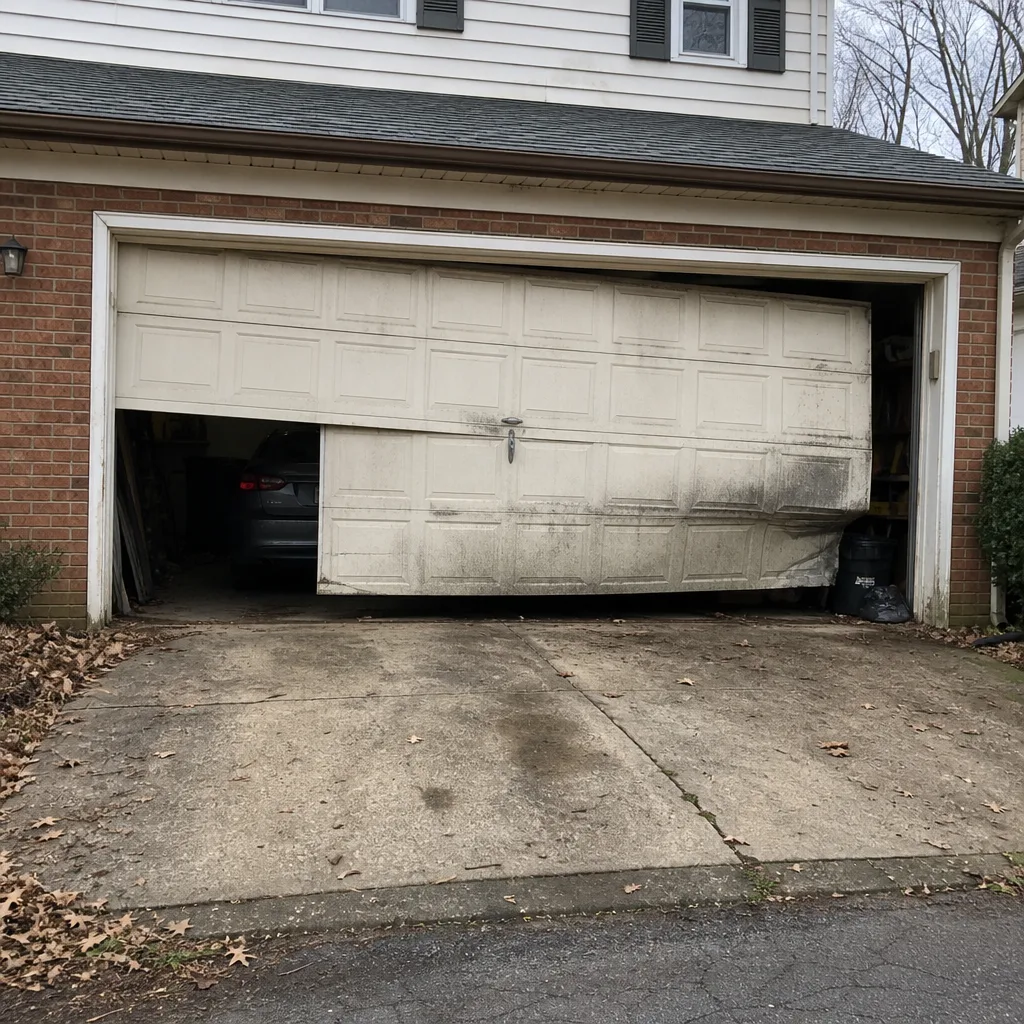 Before
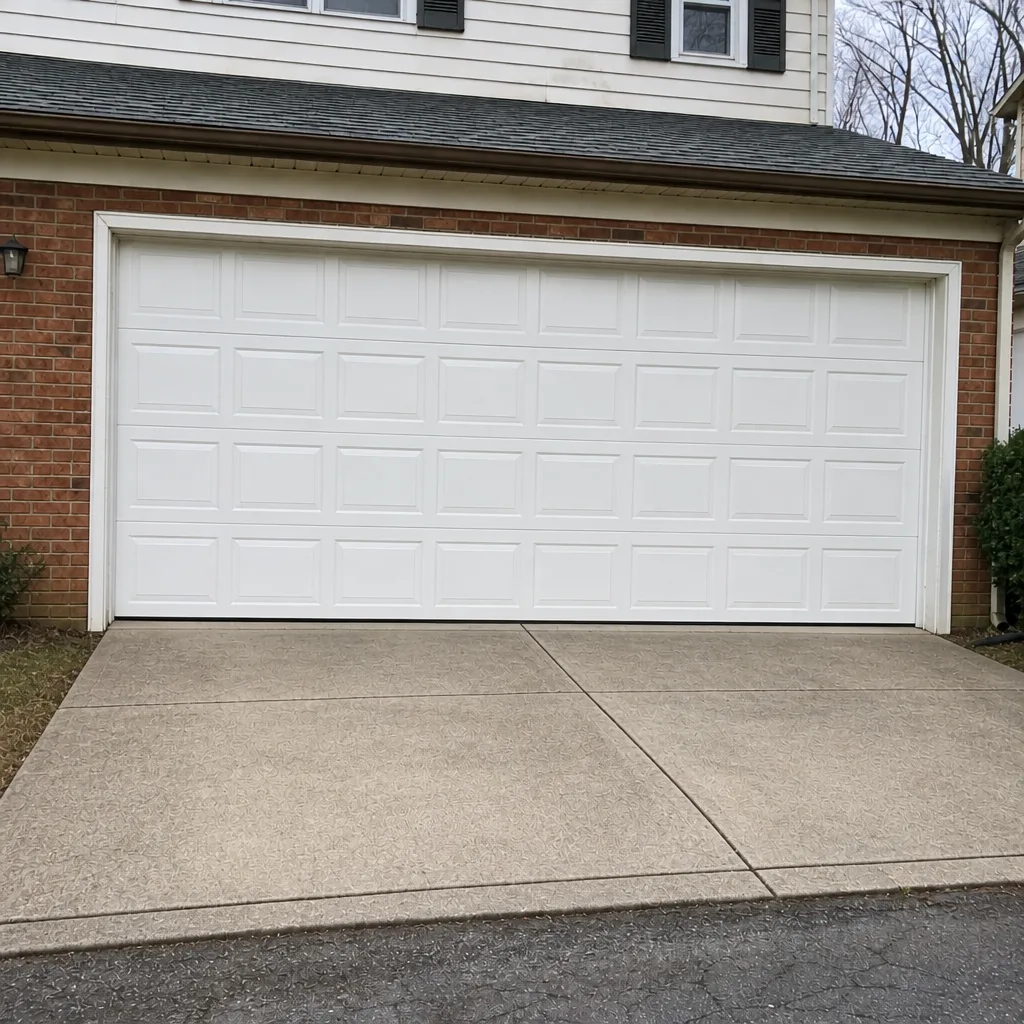 After
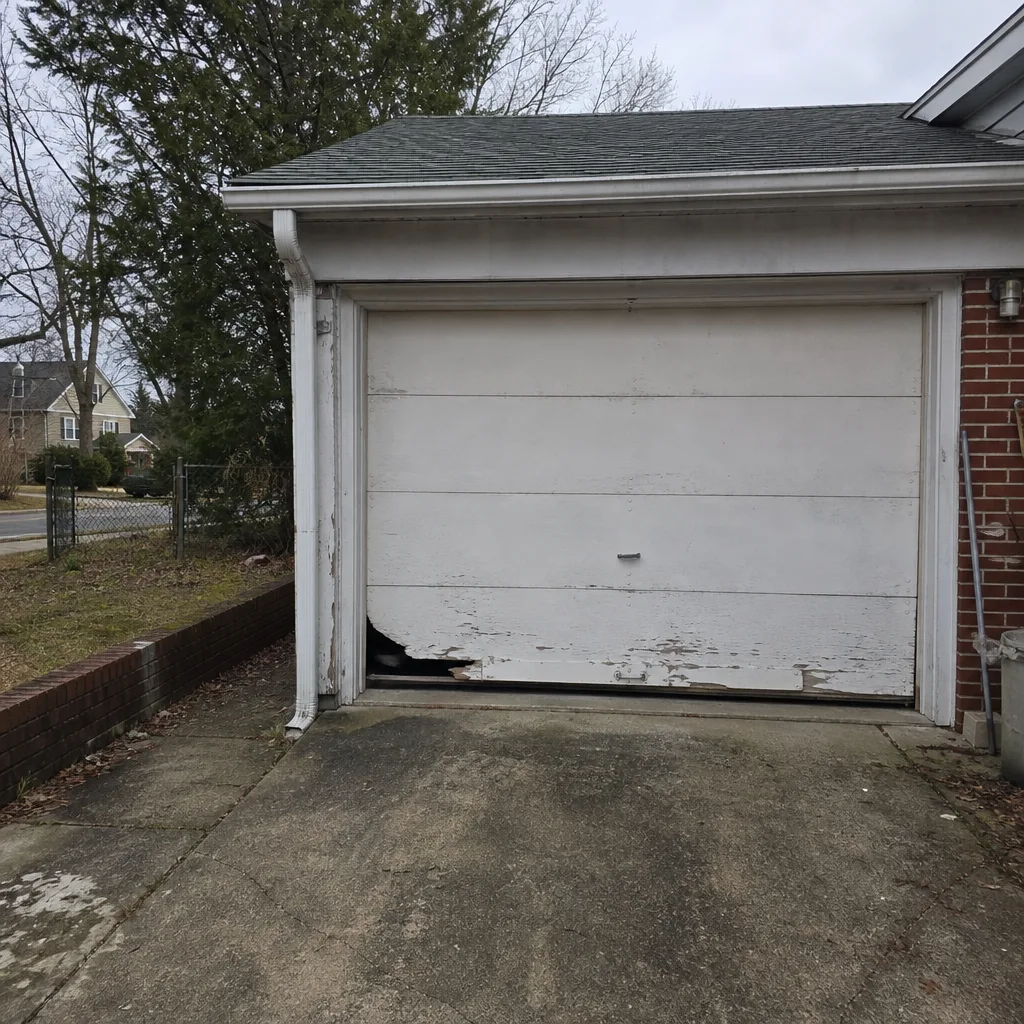 Before
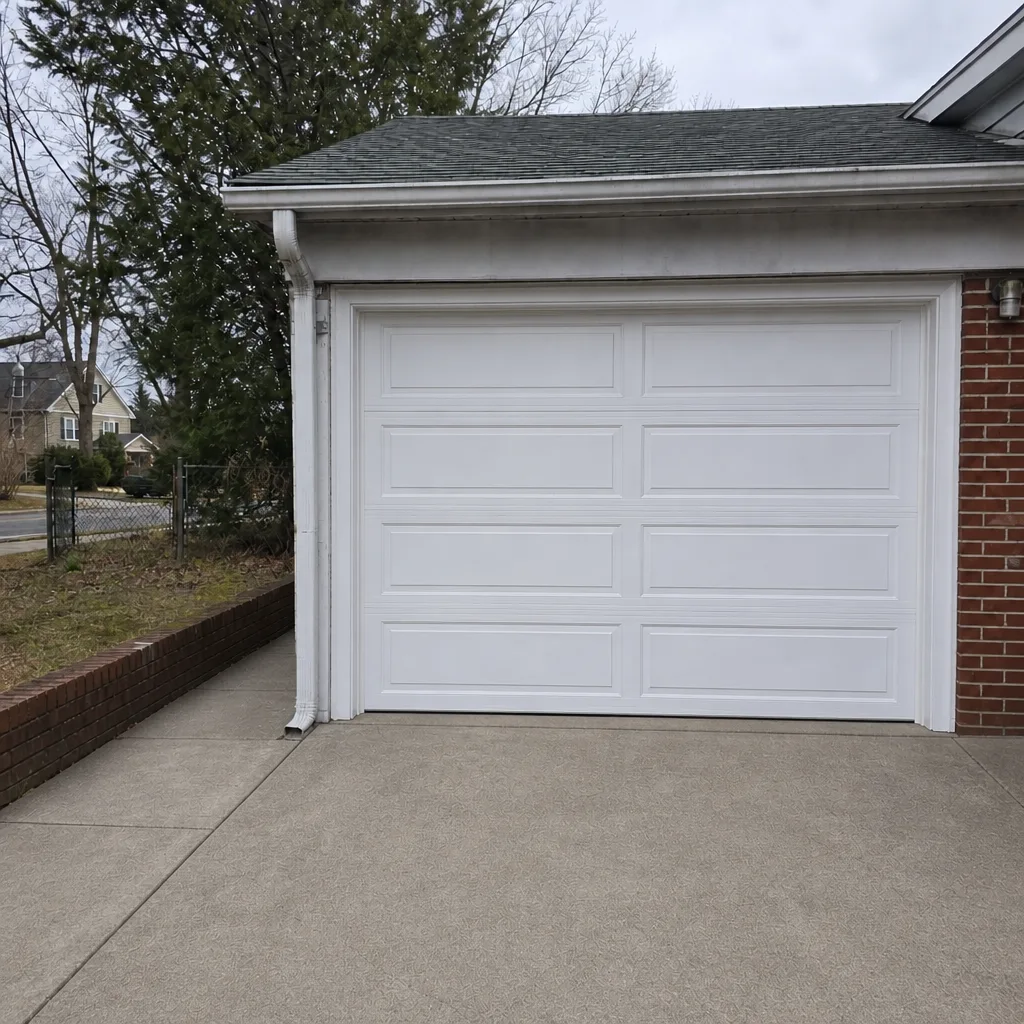 After
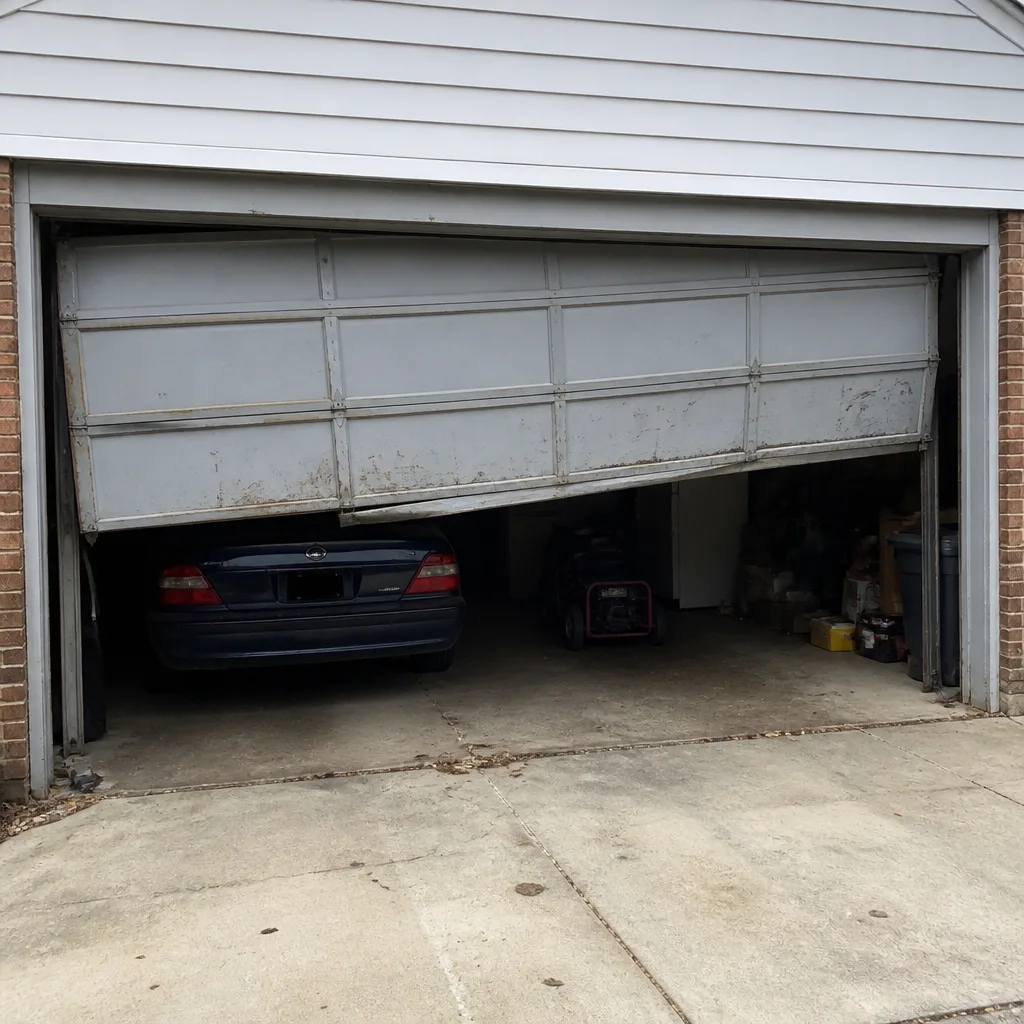 Before
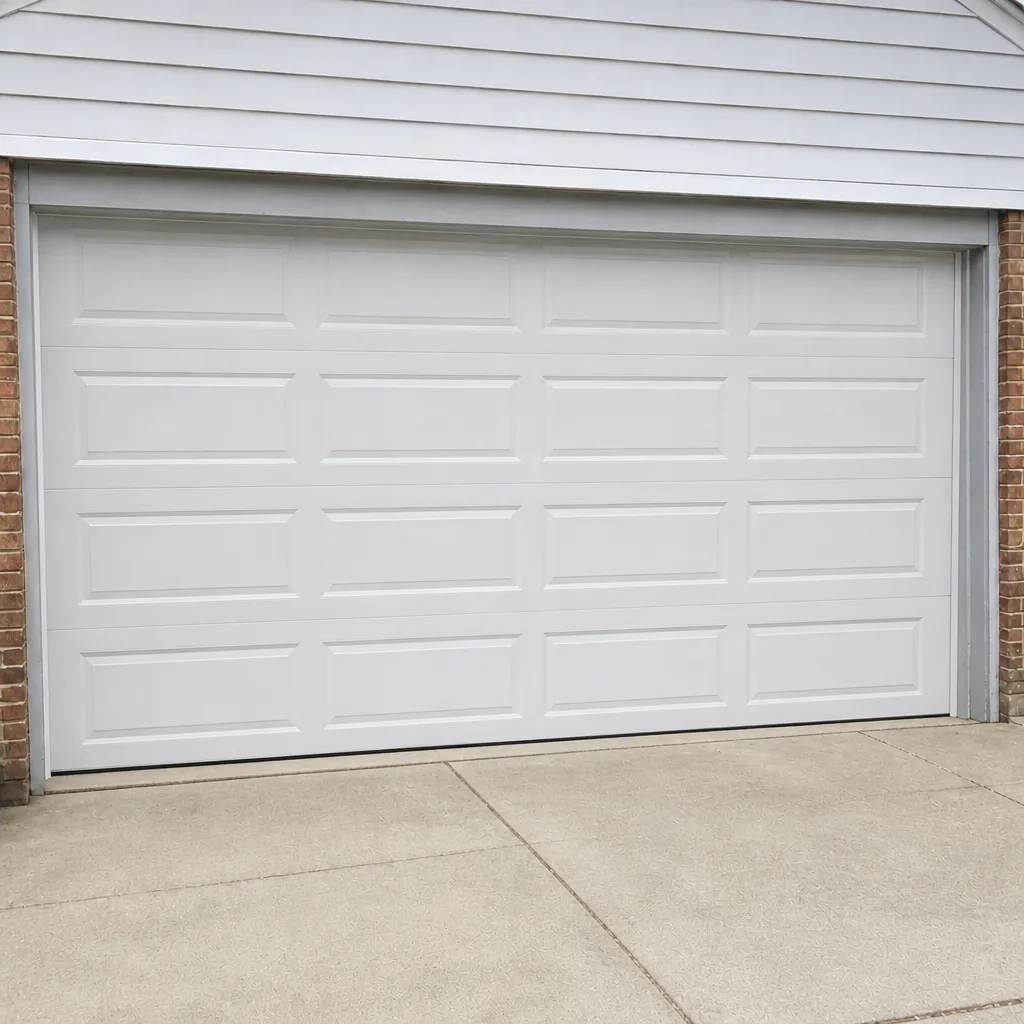 After
When to Call a Professional
Call a professional if you see a gap in a torsion spring, a frayed cable, a door hanging off its track, or a door that won’t stay closed. Call if the door reverses unpredictably, if the opener hums without moving, or if the door feels heavy when you lift it by hand. Call if you’ve heard a popping sound and the door won’t move. And call if the door is noisy at the same point in its travel every time, because that’s a component telling you it’s about to fail. For straightforward repairs, the repair service covers the full range of symptoms described in this guide.
Garage Door Repair Arlington Pros offers free estimates in Arlington. Call (855) 340-9110. We answer 24/7. Fast dispatch from 7am to 7pm, Sunday through Friday. The estimate is free, and the price is quoted and agreed before any work starts, so there’s no surprise on the invoice.
Frequently Asked Questions
The most common are grinding or popping sounds during travel, a door that reverses before it reaches the floor, a visible gap in a torsion spring, frayed cables, and a door that sits lower on one side. In Arlington, we also see a lot of noisy rollers after the humid summer months and broken springs after a sharp cold snap.
Spring repair in Arlington typically runs in the low-to-mid hundreds of dollars for a single spring, though a matched pair is usually replaced together and costs roughly twice that. The written estimate sets the final price, so you know what you’re paying before work starts. Call (855) 340-9110 for an exact quote – estimates are free.
Yes, a door that won’t close is a same-day call. We answer 24/7, and a call outside dispatch hours is booked into the next opening, Sunday through Friday, 7am to 7pm. For a door stuck open or hanging off its track, call (855) 340-9110 right away.
No. The price is quoted and agreed before any work starts, and the written estimate is the price you pay. If we find something the estimate didn’t account for, we’ll discuss it with you before doing anything.
The local professionals we connect you with are licensed and insured as their state requires. They’re trained on LiftMaster, Chamberlain, Genie, Clopay, Amarr, Wayne Dalton, Craftsman, and Raynor systems, and they handle spring and opener repairs in-house rather than passing them to a subcontractor.
If the lights blink but the door doesn’t move, if the door stops at the same point every time, or if the opener hums or grinds but nothing happens, the opener is usually the failure point. If the door itself is heavy, dragging, or off-level, the door is the problem. When in doubt, the brand matters; we work on the top three opener brands and can usually tell from the symptom. Call (855) 340-9110 for a free estimate.
The Bottom Line
Garage door failures announce themselves long before they happen. Sound, timing, and visual cues, especially on springs, cables, and rollers, give you weeks of warning. The trick is knowing which cues mean “call today” and which mean “schedule it.” Springs under tension and frayed cables are always urgent. A noisy roller can wait for a weekend tune-up. When a sign falls in the middle, a free estimate in Arlington settles it. One call covers repair, opener, spring, or full replacement. Our technicians have up to 12 years of experience with the components that matter most, and we’d rather look at your door now than have you call us after it fails.
Call Garage Door Repair Arlington Pros at (855) 340-9110 for a free estimate. We answer 24/7. Fast dispatch from 7am to 7pm, Sunday through Friday.
Written by the team at Garage Door Repair Arlington Pros.